The Cost of Silent Team Members
Have you ever stayed silent, even when you've had something important to contribute - because you're worried about how your colleagues will take it?
Thirteen years ago, I was working as a Policy Advisor at the Ministry of Justice - and I was waiting to hear whether I'd been promoted.
We'd just got the results of our employee engagement scores back. They were pretty terrible - maybe 10% of us were "engaged".
I remember sitting at the same table as the General Manager who was due to make my promotion decision.
We were asked to consider: "How might we improve our engagement scores?" Or something like that.
I had ideas. Lots and lots of ideas.
But what do you think I said?
Yep, you guessed it.
Absolutely nothing. Zip. Nada!
I weighed up the risks and decided it wasn't worth it.
The cost of silence
Since then, I’ve become fascinated with why capable and committed people stay silent - even when they have so much to contribute.
And I wonder...
How many people are sitting in your meetings today having the same internal dialogue I was having thirteen years ago?
In a 2021 UKG research survey, 1 in 3 employees said they'd rather quit than voice their concerns.
And this silence is expensive!
We pay talented people for their judgement, experience, creativity, and insight. But then they're just sitting there second guessing themselves - worrying about how they'll come across.
But yes, you might be thinking:
"Hey Paul, it's not my job to ensure people can speak up."
"And also I don't have time to molly-coddle my staff. I'm busy, and tired, and honestly is it the holidays yet?"
Psychological safety
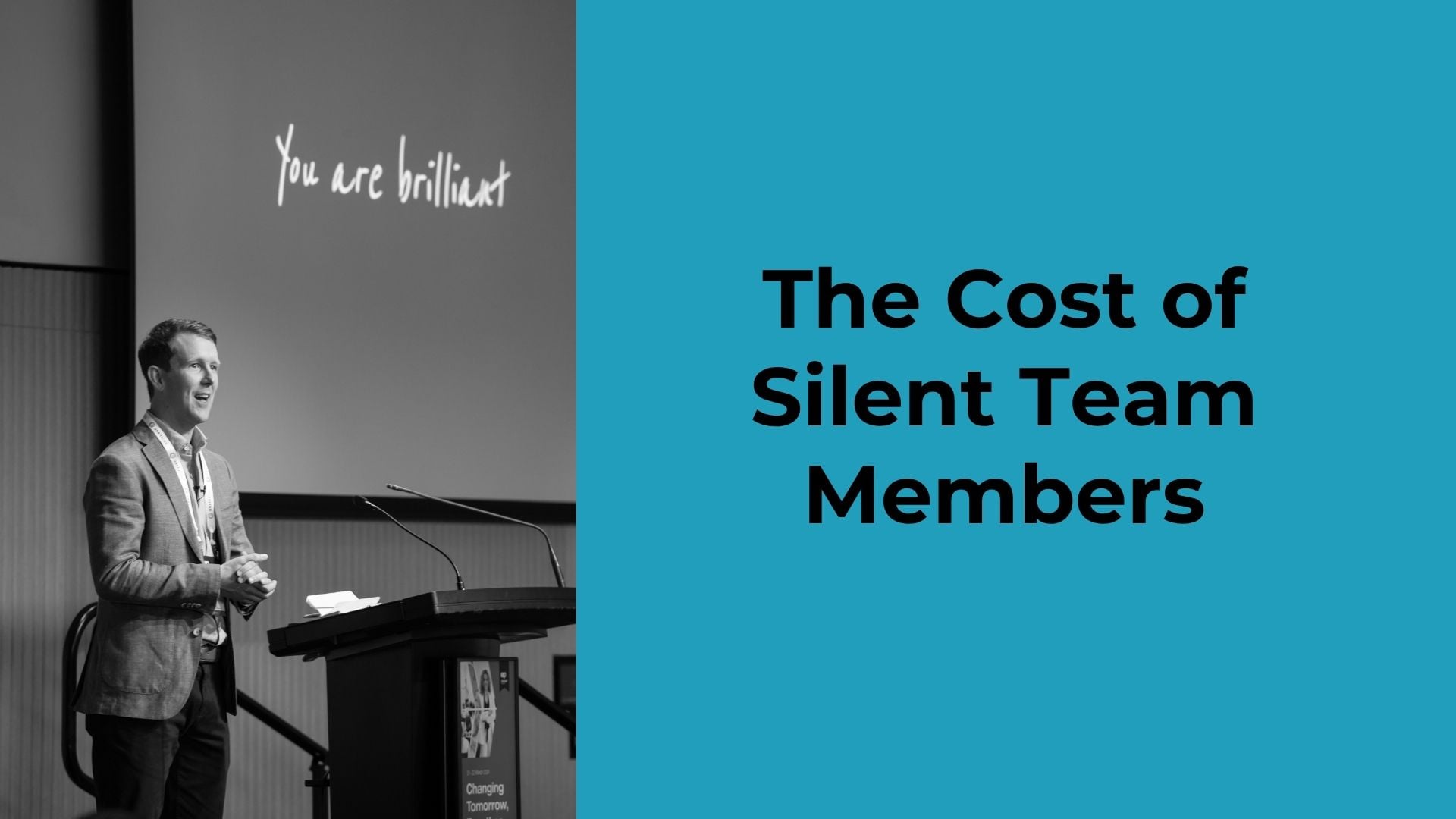
Last Friday I was asked to speak to 260+ local government leaders about psychological safety.
Harvard professor Amy Edmondson coined the term psychological safety in 1999, defining it as “a shared belief held by members of a team that the team is safe for interpersonal risk taking.”
In plain English: Can you speak up, ask questions, admit mistakes, or challenge assumptions without fear of being embarrassed, rejected, or punished?
I said to the organisers: We can talk about psychological safety until the cows come home, but it won't make an iota of difference unless your leaders are able to stay curious and open-minded when their viewpoints are challenged.
It's not an easy task that one, as it requires us as leaders to accept our blind spots (of which there are many). We have to be humble enough to ask good questions and patient enough to listen to what emerges.
But I wonder:
* From 0 to 10, how safe is it to speak up in your team?
* And what would the impact be if you could lift that by a few points?
Ngā mihi,
Paul
P.S. I talk more about this in The Question Effect and I've just received a fresh print-run. Grab your copy here>>
P.P.S. I'm working with a lot of leaders and teams at the moment to build stronger psychological safety so you can improve culture and performance. Flick me an email at paul@paulmcgregor.co.nz if you'd like to work on that too.