The Bell Curve of Engagement
As a leader, you've probably heard yourself utter these words at some stage:
"I just wish people were more engaged!"
I've been working a lot with membership associations this year who face this challenge head-on.
Associations blossomed in the 21st century, as technology made it easy for professional people to gather, advocate and work together. You name a profession, and we can probably find several associations who serve them.
I love membership associations because they're driven by a deep drive to serve their members and make a difference.
But they're struggling right now in the face of three big pressures:
- First, they've got declining revenue and/or membership numbers. When budgets tighten, memberships get cut. They've gotta work harder than ever to prove their value.
- Second, their staff are stretched far too thinly. They're doing too much while running on the fumes of goodwill.
- Thirdly, AI, alternative networks and direct-to-consumer communities are threatening their long-term viability. Their business model is under threat.
Sound familiar?
Their challenges are your challenges too.
The bell curve of engagement
This is one of the key tools I use to help associations improve their member retention, but it can apply to your leadership role no matter the context.
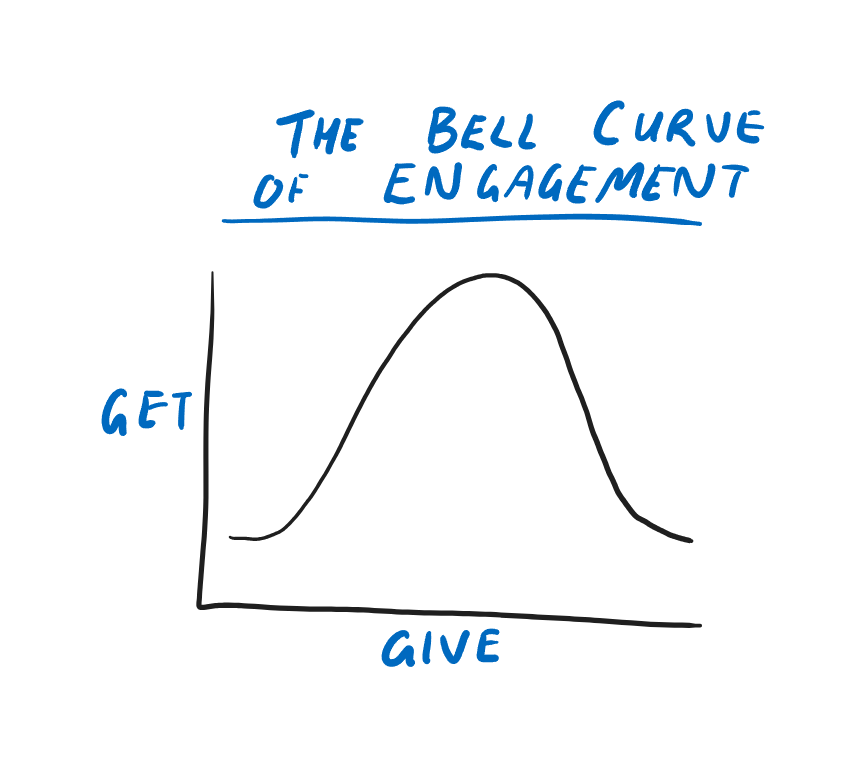
The model isn't the point; the questions it raises are the point.
Questions like:
* Who's at which part of the curve and why?
* Who's giving more than they're getting?
* What would it take to shift the entire curve to the right?
* Where should we invest our energy? With those at the left, those in the middle or those at the right? Why?
The insights on the other side of that conversation are often quite profound.
Give yourself a break
It's rare for everybody to be fully engaged all the time. Life gets in the way. Or some situations just don't suit some people.
As leaders, we've got to stop beating ourselves up when people get disengaged. It's natural and normal.
It's healthy, even. Why? Because it opens up a forum for debate and discussion about what could be done better.
So, if you've got a team member or a colleague or a member who has lost their mojo... that's all good.
What better excuse for a curious conversation?
Til next time,
Paul